
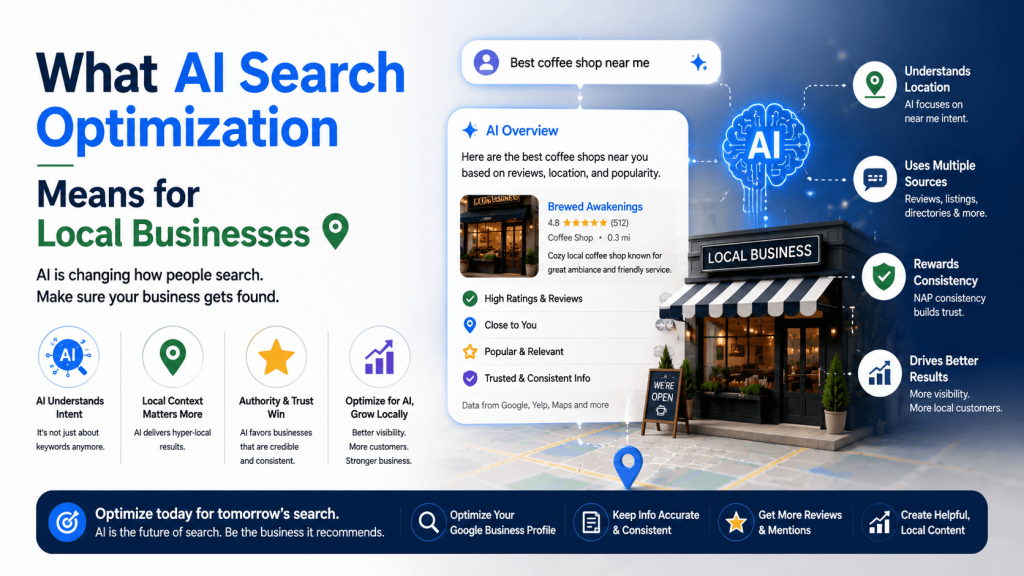
A customer recently asked an AI assistant for a trustworthy accountant in their zip code and received a confident, specific answer with three names, none of which came from a paid ad. That shift, from scrolling search results to receiving a direct AI-generated answer, is changing what it means to be discoverable, and most small business owners have not caught up yet.
AI Search Optimization, often shortened to AEO, is not a replacement for SEO. It is an extension of it, built around helping AI tools like AI Overviews, ChatGPT Search, and Perplexity understand your business well enough to recommend it confidently.
How AI Tools Actually Generate Local Answers
Unlike a traditional search results page, AI tools synthesize an answer from multiple sources at once. They tend to favor businesses with clear, structured, and repeated information: a consistent name and location, a defined category of service, and corroborating mentions across several trustworthy sites rather than just one polished webpage.
This means a beautifully designed website with inconsistent information elsewhere on the web may actually underperform compared to a simpler business with clean, matching data spread across multiple sources.
Structured, Consistent Data Is the Real Advantage
AI systems have limited ability to resolve conflicting information. When they encounter it, they typically default to caution, either omitting a business from a recommendation or hedging the answer with uncertainty. Businesses that keep their name, address, phone number, and service categories aligned everywhere give these tools less reason to hesitate.
Directories play a meaningful role here because they present business information in a structured, easily parsed format. A listing on a platform like Pro Business Street contributes exactly the kind of organized, verifiable data point that AI answer engines tend to rely on when compiling recommendations.
Practical Steps to Prepare for AI Search
Start by writing a clear, specific business description free of vague marketing language, since AI tools respond better to concrete details than broad claims. Make sure your services are described the way customers would actually ask about them, using natural phrasing rather than internal jargon.
From there, extend that same clarity to your Google Business Profile and directory listings, so every source an AI tool might consult tells the same consistent story about who you are and what you do.
Conclusion
AI search optimization is less about chasing a new trend and more about doubling down on fundamentals that have always mattered: clarity, consistency, and trustworthy corroboration across the web. Businesses that get this right now are positioning themselves to be the answer, not just a result, as AI-driven search continues to grow.